

Procurement departments are under growing pressure to provide more than simply cost reductions in the increasingly complicated corporate environment of today. In order to preserve operational efficiency, modern procurement departments must concurrently manage risk, guarantee compliance, encourage innovation, and create sustainable supplier networks. A crucial choice that may either help or impede these complex goals is choosing the best procurement software. Differentiating really transformational platforms from just sufficient systems is becoming more and more difficult as a result of the abundance of solutions on the market, each boasting higher capabilities. This thorough tutorial examines eight crucial elements that have to serve as the cornerstone of any software selection procedure for procurement. Organizations may easily traverse the selection process and choose a request for proposal software that truly meets their particular procurement difficulties by meticulously comparing various solutions to these crucial criteria.
-
Process Compatibility and Workflow Customization
When your company is forced to forgo efficient procedures in favor of strict system limits, even the most technologically sophisticated procurement solution falls short. The best procurement software doesn’t require complete procedural changes; instead, it adjusts to your current procedures. Map out your present procurement procedures, from creating requisitions to paying suppliers, and evaluate how well each system supports these steps. Take special note of the exception handling procedures, conditional workflow branching, and approval routing features. In order to facilitate process modifications without costly technical support, the system needs to provide user-friendly configuration tools. Keep in mind that procurement procedures usually vary as company requirements do; seek for systems that have the ability to adjust workflows over time without interfering with daily operations.
-
User Experience Across Stakeholder Groups
Different user groups with different levels of technical proficiency and frequency of system interactions are served by the best procurement software. While procurement professionals use the system often, requisitioners may use it rarely and with little training. Finance teams need to integrate with accounting procedures, department managers need user-friendly approval interfaces, and suppliers communicate via external portals. Instead of concentrating just on procurement specialists throughout the review process, take into account the experience of each stakeholder group. Set up demonstrations with representative users from various departments to evaluate the ease of job completion and interface intuitiveness. Seek out dashboards that may be customized to display pertinent data according to user roles and responsibilities. Since clearance decisions frequently take place outside of typical office settings, mobile accessibility has become more and more important.
-
Implementation Methodology and Resource Requirements
Overall performance and return on investment are greatly impacted by the process from software selection to productive operation. Examine the implementation process, schedule, and resource needs in detail before deciding on any procurement option. Ask internal personnel for comprehensive implementation plans that include important deadlines, organizational duties, and anticipated time commitments. Talk about data migration strategies, including how to preserve relationships and integrity when transferring historical data. Recognize training initiatives, particularly those for various user groups and continuing education for new hires. Take into account the makeup of the implementation team, including the vendor and any necessary internal members. Realistic resource planning avoids mid-project bottlenecks and disappointments, since organizations often underestimate the amount of work necessary for successful implementation. Keep in mind that implementation requires a substantial financial outlay in addition to software licensing; thus, its viability is a crucial criterion.
-
Total Investment Analysis Beyond Licensing Costs
The entire amount of money needed for the request for proposal software implementation and operation includes initial software license or subscription fees. Budget overruns and questioned value result from organizations’ frequent underestimation of unforeseen costs that arise over the software lifecycle. Create thorough cost estimates that account for implementation services, system configuration, data migration, integration development, training initiatives, internal resource needs, and continuing support prior to selection. While some suppliers charge extra fees for features like supplier portals or sophisticated analytics, others need the purchase of additional modules in order to obtain the promised capability. Gain a thorough understanding of the pricing model, paying special attention to how expenses change as the number of users or transaction volume rises. To facilitate insightful ROI estimates and solution comparisons, create five-year predictions that account for all expected costs.
-
Business Intelligence and Advanced Analytics Capabilities
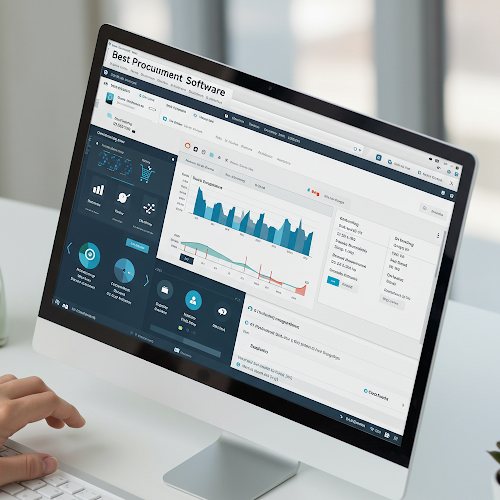
Beyond transaction processing, modern procurement provides strategic insights that impact more general company choices. Whether procurement actually influences strategic direction or just carries out purchase transactions is greatly influenced by the analytical capabilities of your best procurement software. Compare the dashboard features, data visualization tools, and reporting architecture of each solution to your unique analytical needs. Take into account both basic reports that cover popular procurement parameters and the ability to customize them for analyses unique to your firm. Evaluate how simple it is for non-technical people to generate ad hoc reports without specific help. Predictive capabilities provided by advanced systems may estimate price trends, spot expenditure patterns, and suggest areas for improvement. Based on observed results, the most advanced systems use machine learning to constantly increase analytical accuracy.
-
Supplier Enablement and Relationship Management
Effective procurement is becoming more and more reliant on cooperative supplier relationships that go beyond simple transactions. These connections should be facilitated by your best procurement software, extensive supplier management, and enablement features. Examine supplier onboarding procedures, such as paperwork management, information validation, and registration workflows. Think about features that enable suppliers to manage their data, access opportunities, reply to inquiries, and monitor the status of payments through a supplier portal. Examine communication solutions that support organized discussions as opposed to disjointed email exchanges. Performance scorecards, which are incorporated into advanced systems, objectively assess supplier contributions in a number of areas, such as quality, responsiveness, innovation, and delivery reliability. Certain systems offer tools for development planning that turn performance gaps into organized efforts for improvement. Keep in mind that supplier connections have a big impact on procurement results, thus supplier enablement skills are a crucial assessment factor that’s frequently missed when comparing features.
-
Integration Architecture and Technology Compatibility
ERP systems, finance platforms, inventory management tools, and specialist applications are all part of the larger technological ecosystem in which the best procurement software functions. How well your procurement solution communicates with these neighboring systems depends on the integration architecture. Record the necessary integration points during the assessment process, such as transaction flows, approval routes, reporting requirements, and master data synchronization. Examine the integration capabilities of each system, taking into account pre-built connectors, data transformation tools, middleware compatibility, and accessible APIs. To guarantee conformity with organizational norms and support capabilities, talk about technical needs with your IT department. As your technological environment changes, take into account future integration requirements, especially those related to impending system installations or cloud migration plans. The most effective procurement solutions provide smooth information flows between systems without the need for manual reconciliation procedures or unnecessary data entry.
Conclusion
A crucial choice that affects operational performance, cost management, compliance efficacy, and strategic contribution is choosing the best procurement software. Organizations may choose technology that really addresses their particular procurement concerns and lays the groundwork for long-term success by methodically weighing prospective solutions against these eight decision-critical aspects. This thorough method acknowledges that choosing the right procurement and request for proposal software involves more than just comparing features; it also takes into account important aspects like process compatibility, user experience, implementation strategy, overall investment, analytical capabilities, supplier enablement, integration architecture, and ongoing innovation.