
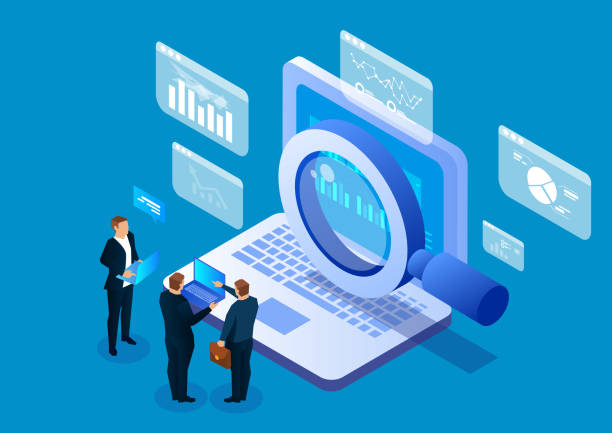

Digital marketing with Artificial Intelligence. The journey began with the AI’s arrival, predicted to evolve in. 2026 advanced AI articles.
Even more than in the past, Artificial Intelligence has been a shaping force in the digital world—but see 2026: there is no marketer who can afford to ignore this turning point. From simple automation tools, it grew into smarter systems that could create content, optimize campaigns, predict consumer behavior, and even run entire marketing strategies without human involvement. Companies of all niches—from fitness to finance—are moving towards AI-first marketing models to be able to compete in an ever-growing digital landscape.
AI is not merely a convenience in 2026, but an imperative. Those embracing it are scaling faster, spending smarter, and connecting with audiences deeper than ever before. And the ones that are resisting are being left behind at a rapid clip. The tech and startup landscape is booming and pushing students and professionals to acquire knowledge of these latest AI-powered skills through Digital Marketing Courses in Pune and Digital Marketing Classes in Pune to remain relevant.
In any case, if you are running a business, studying digital marketing, or a professional who wants to advance your skills, knowing the role of AI in marketing today is significant. Join us as we dive into exactly how 2026 has changed how AI is changing the way digital marketing is being done and how marketing is being done as a whole — one algorithm at a time.
Here’s How AI Is Shaping Digital Marketing In 2026
For quite some time, Artificial Intelligence has been a part of digital making, but starting from the year 2026, it seems like every successful campaign relies on AI for at least running at a core engine level! Tools that were once ancillary (chatbots, content generators, automated ad platforms, etc.) have now become full-stack, intelligent systems that marketers use on a daily basis. The transition is HUGE and happening quicker than most brands anticipate.
The first and possibly most significant change we can expect to see come 2026 is autonomous AI marketing systems—tools that don’t just generate insights, but autonomously execute decisions as well. Gone are the days when a marketer would spend hours tweaking keywords, designing A/B tests, or trying to predict how to entice the audience to make the next click; now, AI systems perform these functions in real-time. Imagine handing your digital strategies over to someone who is never tired, never confused, and is always working with new data. That has made it much quicker, accurate, and undoubtedly much more lucrative as well to market in this way.
We see the most drastic transformation in the way businesses target and understand their audiences. AI now processes thousands of data points for every single user—from where they browse to very specific emotional triggers—resulting in exceptionally accurate behavioral profiles. This information helps brands create campaigns that seem like they have been created just for you. The year is 2026, and personalization is not merely a preference; it is the standard. According to Laura, generic ads and one-size-fits-all messaging no longer resonate with consumers, and AI is the technology that keeps brands relevant.
Toward the big change in predictive intelligence. Gone are the days when marketers would depend on data from the recent past; AI predicts what your audience would do in the future and even how a market curve might shift. Such a predictive ability also increases the ROI by ensuring that businesses can effectively optimize content, budget, and ad placements before issues arise. Imagine a crystal ball, but instead of magic, it’s powered by algorithms.
AI-Powered Personalization at Scale
While personalization has been a crucial aspect of digital marketing for decades now, by 2026, it has matured into something much, much more sophisticated, nuanced, and emotionally aware. But it’s no longer about how AI just “segments audiences” — it designs entire journeys of the user based on their personalities, behavior, motivation, and even sentiment. Just this level of personalization is not possible for humans and has revolutionized the interaction between brands and customers.
Up until now, AI has been leveraging a real-time database to create dynamic profiles on every single user. Instead of traditional factors like age, gender, or geographic location, purpose-built algorithms analyze micro-behaviors —small but significant actions like scrolling speed, dwell time, vocal tone in chat interactions, and even pauses on web pages. Based on these insights, AI understands what a user wants even before they do. It’s the reason 2026 campaigns are sleeker, more intuitive, and eerily correct.
When a customer is exploring fitness content in the late-night hours, AI immediately customizes ads, emails, and suggestions according to their patterns. For those people who frequently leave carts at the payment page, the AI finds their emotional roadblocks and then adapts its messaging automatically —a discount with a time limit, or with reassurance-based language. The whole journey is dynamic, individualized, and self-optimizing.
Even more interesting is the cross-platform integration of AI. That same user then gets tailored experiences across social media, search engines, emails, and even chatbots. The journey is connected, consistent, and personal at every touchpoint, resulting in higher engagement and conversion with a seamless experience.
Content Creation and Optimization Using AI
AI has revolutionized everything about content marketing, and by 2026, content will be nearly unrecognizable from what marketers were doing just a few years prior. AI-driven creative engines now make what has taken entire teams, endless revisions, brainstorming sessions, and hours of scouring through research and data to produce, all of which can be done in minutes. Now, here is the catch: AI in 2026 is generating writing that does not sound like writing from a Cleanroom. It is the production of emotionally intelligent, audience-relevant & search-optimized content that sounds human.
The AI tools of today have evolved beyond automated rewriting or paraphrasing—they now analyze factors such as audience, psychology, trending topics, seasonal demand, gaps in competitor content, and search engine behavior before generating content. This gives brands the ability to deploy articles, ad copies, YouTube scripts, social media captions, website content, and email sequences that actually convert in real-life campaigns. Since AI can also interpret tone, demographic preferences, niche vocabulary, and even storytelling structures, the resulting content is far more resonant than a generic marketing touch.
And the second game-changing development in 2026 is the introduction of AI, which gives you SEO strategy maps. Instead of spending hours creating SEO research to check what keywords to target, search trends, which competitor ranking pages, or backlink gap analysis, AI builds entire SEO roadmaps in a few seconds. It finds high-value keywords, evaluates ranking difficulty, organizes topics into a pillar structure, and even estimates how long it will take for a content piece to be ranked based on its domain authority and search intention. This also made SEO more stable and less time-intensive.
Since AI is a real-time optimizer of content, businesses using these tools are ahead of the game. If search trends change, our algorithms will automatically update keyword targeting, rewrite snippets, optimize headings, and change the reading levels. Gone is the manual labour of refreshing content; now it is all automated.
And this is why the demand for Digital Marketing Courses in Pune, focusing on higher Google and content automation tools, is rising sky-high. Even absolute newbies, signing up for Digital marketing Classes in Pune, are beginning to discover ways to use AI for keyword research, making plan outlines, brand-tone modelling, and performance optimisation. There is no debate here, the industry expects that marketers, not as a nice additional extra but as a basic necessary skill, are familiar with these tools.
AI Does Not Replace Content Marketers — But Becomes A WAY More Specific Content Marketer In 2026, Even New Content Needs To Be Smarter, Deeper, More Strategic, Than Never Before
The New Era of AI-Driven SEO
In 2026, Search Engine Optimization is no longer the slow, labor-intensive, extremely manual process it used to be. It has completely revolutionized the way in which websites get optimized, how content gets ranked, & how search engines understand user intent! For instance, keyword stuffing, building random backlinks, or writing long articles without depth are old-school strategies. The SEO driven by AI is more intelligent, quicker, and significantly more precise, and turns the attention away from “search engines” and towards actual human behavior (which is precisely what both Google and all major platforms do today).
The most significant of these is 2026’s move to an intent-first indexing methodology. Before every query, search engines are now focusing on the emotion, context, and behavior of the user intent. AI-driven search algorithms look for content that answers the deeper “why” behind the search , versus matching for keywords. Now, marketers need to know the psyche of their audience, not just the language. This is where AI tools come in handy, by analyzing millions of searches to identify patterns that predict what users really want.
And this is where AI-assisted SERP forecasting comes into play — tools can actually simulate how your content will perform — even before you publish it. They look at competitors, search trends, authority signals, and content gaps to predict ranking probability. This ability to predict future performance enables marketers to stay away from guesswork and invest their precious time only in those topics that stand to perform well.
Technical SEO has also been automated by AI. From crawling issues to schema markup updates, to site speed enhancements, to internal linking strategies, AI Platforms have taken over almost every technical detail behind the scenes. Gone are the days when marketers had to know SEO coding to run advanced projects; AI does it to precision for you.
However, the most remarkable aspect of it is the continuous content optimization that AI does. Keywords are optimizing keyword density, suggesting a title rewrite, readability score, and performing a live rewrite of meta descriptions as search trends change. Such flexibility makes those businesses exponentially more competitive, as their content never goes “stale.”
Conclusion
AI full form — Artificial Intelligence has changed the dynamics of digital marketing in the year 2026 once again — that changed how businesses work, how customers behave, and how marketers create meaningful brand experiences. All that once took large teams and brute force, today can be done with smart automation, predictive analytics, and hyper-personalized marketing strategies powered by AI-based systems. And whether it is content creation, SEO, paid advertisement, or email marketing, AI has become that invisible engine for most of the successful campaigns today.
What we are witnessing is not merely a technological evolution but rather a strategic one. The role of marketers is evolving from their continued execution of the same tactics to serving at a high level, overseeing the creative and human-centric narratives many brands tell. AI takes care of the data, the automating and the optimizing; humans provide emotional intelligence, creative nuance, and ethical judgment. In 2026, the combination of AI and a human touch is the key to success in digital marketing.