
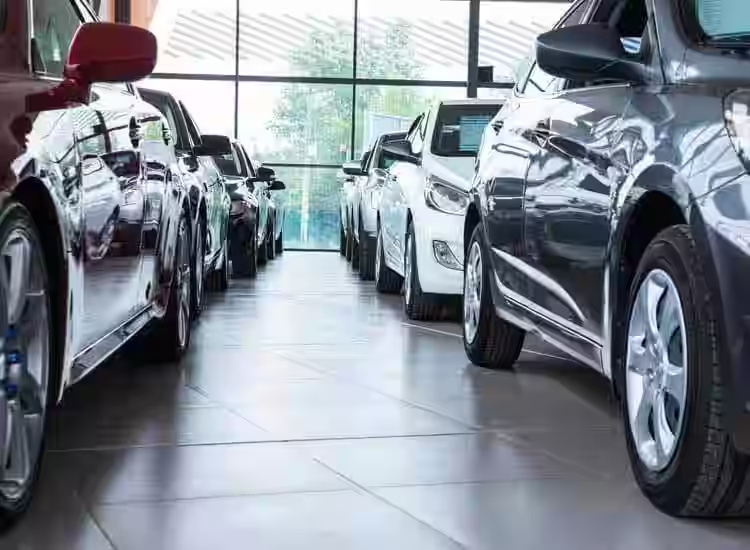

The main point of contact between automakers and consumers is vehicle showrooms. These businesses make the process of buying a car easier for customers by providing a variety of services, such as financing choices and consultations, in addition to displaying different automobile models. Car showrooms are a vital component of the automotive business because they offer a dynamic and captivating environment where prospective customers may browse, test drive, and select the ideal vehicle.
1. The Objective of Auto Showrooms
The purpose of car showrooms is to provide a physical area where buyers may see and interact with a variety of automobiles. A showroom serves as more than simply a place to display cars; it is also a place where buyers can compare models, get professional assistance, and learn about features, performance, and costs. Customers can interact with a car brand and gain a thorough understanding of its goods by visiting the showroom, which serves as a representation of the brand.
2. Car Showroom Types
Generally speaking, car shops are categorized according to the brands they carry. Certain car manufactures have approved dealerships that sell the whole lineup of that manufacturer’s automobiles. In order to give clients a wide range of alternatives, these showrooms typically feature flagship models, the newest releases, and variations of well-known automobiles. Customers can also compare several brands and make an informed choice by visiting multi-brand showrooms that feature vehicles from multiple manufacturers.
3. The Experience in the Showroom
The experience of going to a vehicle dealership is usually intended to be both educational and immersive. Salespeople are educated to help clients comprehend the features and attributes of various automobiles. Each car model has a dedicated area at most dealerships, along with interactive displays, brochures, and digital presentations that outline the features of the vehicle. Before making a choice, buyers can virtually “test drive” an automobile in some contemporary dealerships thanks to virtual reality (VR) experiences.
4. Vehicle Inspections: The Crucial Step in the Decision-Making Process
The ability to take test drives is one of the most important features of a vehicle dealership. Customers are frequently given the option to test drive an automobile after looking over its features, which gives them a chance to see how well it performs on the road. Buyers who wish to experience the car’s handling, comfort level, and driving experience must take a test drive. Customers are given a genuine impression of the car’s performance through test drives, which are frequently held in actual driving situations.
5. Consultation with Customers and Professional Guidance
Salespeople for cars are essential in helping clients navigate the showroom environment. These experts help clients grasp the subtleties of each car’s characteristics and capabilities by offering knowledgeable guidance on various models. They respond to inquiries concerning interior comfort, technological integration, safety features, fuel economy, and other topics. To ensure that buyers have all the information they need to make an informed choice, car dealerships are staffed by trained individuals who can explain financing choices, warranties, and maintenance packages.
6. Options for Financing and Insurance
Financing is one of the most important parts of buying a car, and auto dealerships usually provide a number of financing choices. Numerous automobile dealerships offer loans, simple EMI plans, and down payment help to customers through their relationships with banks, financial institutions, and the finance departments of automakers. Customers can better understand the intricacies of auto loans by navigating the financing process with the assistance of sales personnel.
Car dealerships provide insurance plans in addition to finance, which buyers can take advantage of at the time of purchase. As a one-stop shop for all the necessary services associated with car ownership, they typically collaborate with insurance firms to provide clients with low rates on auto insurance.
7. Exclusive Deals and Promotions
In order to draw clients, auto dealerships usually provide special offers and discounts, particularly around holidays or as part of promotions tailored to a particular brand. Cash discounts, exchange offers, low-interest loans, and free accessories are a few examples of these promos. In order to enhance foot traffic and sales, auto showrooms usually host sales events or seasonal discounts, which enable customers to buy cars at a discount.
Furthermore, a lot of dealerships have loyalty programs where clients can get exclusive access to new models, discounts on services, or awards. Car showrooms are a great place for astute shoppers searching for discounts because special promotions have a big impact on a buyer’s decision-making process.
8. Maintenance and Post-Purchase Services
Purchasing a car entails more than simply the actual transaction; it also requires ongoing upkeep and care. Post-purchase services, including as routine maintenance plans, servicing, and repairs, are frequently offered by auto dealerships. In order to guarantee that automobiles are maintained in accordance with manufacturer requirements, authorized car dealerships usually offer service facilities staffed by licensed technicians who are trained to operate on that particular brand.
Additionally, several auto dealerships provide extended warranties for their cars, allowing buyers to rest easy knowing that their vehicle will continue to be covered for a longer length of time after the original warranty period has ended.
9. Showroom Layout and Aesthetic Design
The total buying experience is significantly influenced by the layout and design of auto showrooms. Contemporary auto showrooms are made to be both aesthetically beautiful and welcoming to guests. These showrooms are made to present the cars in the best possible light, with roomy, bright interiors. High-end amenities like lounges, beverage stations, and digital screens showing automotive characteristics are now common at showrooms, giving consumers a place to unwind and consider their options.
Typically, showroom layouts are made to help buyers navigate the whole purchasing process, from choosing models to completing the transaction, guaranteeing a smooth and effective experience.
10. Relationship building and customer service
Providing outstanding customer service is essential to establishing enduring relationships with customers. Car dealerships place a high priority on client happiness by providing individualized care and addressing any issues that may arise prior to, during, and following the transaction. Car dealerships frequently follow up with clients to make sure they are happy with their purchase and offer continuing support, demonstrating that customer care goes beyond the initial sale.
Some auto dealerships also host events for their current clientele, such servicing camps or the introduction of new models. By fostering a feeling of community and maintaining a relationship with clients, these events encourage them to come back for maintenance services or future purchases.
11. The Development of Virtual Showrooms
Many auto dealerships now provide online services, enabling clients to peruse models, check prices, and even schedule test drives, thanks to the growth of e-commerce. In today’s digital-first society, these digital platforms have grown in significance since they provide convenience to consumers who would rather purchase from home.
Online showrooms, however, enhance the process rather than take the place of the in-person encounter. Before visiting the actual dealership to make their choice, customers can start their study online, arrange a test drive, or even obtain finance information.
12. Car Showroom Sustainability Initiatives
Both automakers and dealerships are placing a greater emphasis on sustainability. By incorporating green technologies into their operations, a large number of auto dealerships are embracing environmentally responsible practices. To meet the rising demand for environmentally friendly transportation, this involves implementing energy-efficient lighting, cutting back on water use, and providing electric vehicle (EV) models. After purchasing a vehicle from a showroom, arranging delivery or long-distance transport can be simplified by using a US Shipping Company that specializes in vehicle relocation services.
In order to ensure that their operations are in line with environmental values, some showrooms have also taken action to promote recycling and reduce waste. Car dealerships are anticipated to play a significant role in promoting environmentally friendly automobiles and practices as the world continues its transition to sustainability.
13. Auto Showrooms’ Future
Significant technological and consumer engagement breakthroughs are probably in store for car dealerships in the future. Artificial intelligence, augmented reality, and virtual showrooms have the potential to completely change how consumers engage with automakers. Digital customization, virtual test drives, and even full online sales may be available to car consumers.
Car dealerships will adjust by displaying these cutting-edge technologies and giving consumers the information and resources they need to make wise decisions as the automobile industry continues to change with the introduction of electric and driverless vehicles.
14. In conclusion
Car showrooms are a vital component of the car-buying process and are much more than just a location to purchase a vehicle. They give clients the chance to view, evaluate, and test drive a variety of cars in addition to providing professional guidance, financing choices, and after-sale services. Car dealerships are adjusting to the shifting demands of consumers by incorporating contemporary technology and sustainability programs as the automobile sector develops. A car dealership is still an essential place to find your next vehicle, whether you’re upgrading to a new model or purchasing your first car.